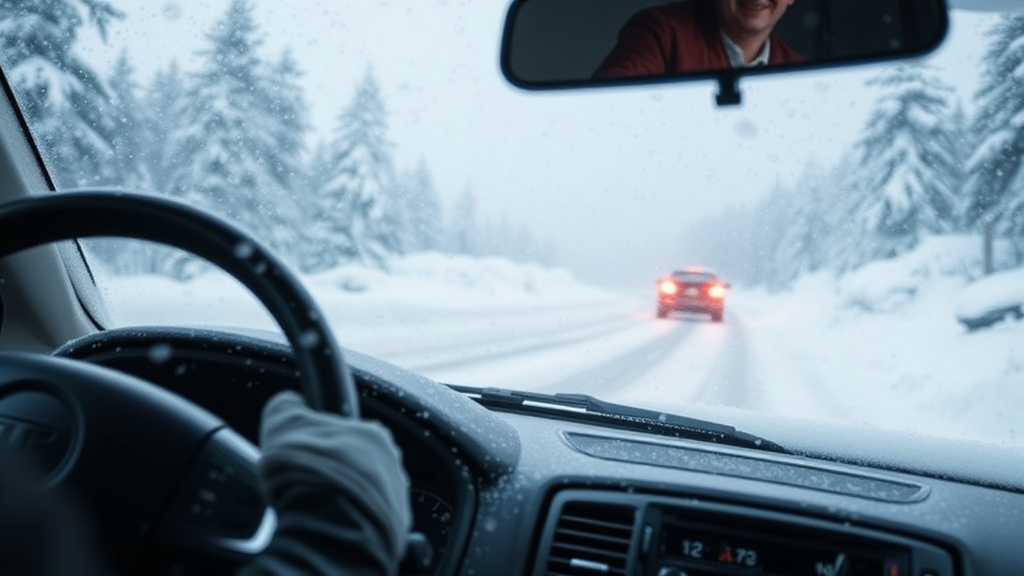
Winter Survival for Your Vehicle: The Reality of Northern Driving

People often assume that living in the sub-arctic requires a massive, gas-guzzling truck with tires the size of a small house. It's a common mistake that leads many newcomers to spend thousands on vehicles they don't actually need, while ignoring the small, inexpensive components that actually keep a car moving when the mercury hits -40. This guide breaks down the technical requirements for winter vehicle survival in Yellowknife—covering everything from the electrical setup to tire physics—because knowing how to manage your equipment is the difference between getting to work on time and being stranded in a driveway that feels like a walk-in freezer.
The truth is that a well-prepared front-wheel-drive sedan is often more reliable on our streets than a stock 4x4 SUV straight off the lot in Edmonton. It isn't about ground clearance or horsepower; it's about thermodynamics. When you're dealing with temperatures that can freeze exposed skin in minutes, your vehicle becomes a life-support system. Understanding how to maintain that system isn't just a matter of convenience. It's about being a responsible member of a community where a dead battery can turn into a serious safety issue. We'll look at the specific hardware you need, the liquids that keep things turning, and the local etiquette of the extension cord.
Do I really need a block heater in Yellowknife?
If you're planning to stay through January, the short answer is a resounding yes. A block heater isn't a luxury here—it's a requirement for anyone who doesn't have the benefit of a heated garage. Most modern engines are designed to operate within a specific temperature range, and -30 is nowhere near it. When the engine block gets that cold, the metal shrinks and the clearances between moving parts change. More importantly, the oil becomes incredibly thick. Trying to start a cold engine in these conditions puts immense strain on your starter motor and your battery. You aren't just 'warming up' the car for your own comfort; you're ensuring the engine can physically turn over without breaking itself.
Most locals start plugging in once the temperature consistently hits -20C. You don't need to leave it plugged in all night, though many do for simplicity. A timer set to turn on three or four hours before you leave is usually plenty. However, the block heater is only one part of the equation. Many people also install oil pan heaters—basically a heating pad that sticks to the bottom of the engine—to keep the lubricant fluid. There's also the 'circulating' heater which warms the coolant and moves it through the block. If you're serious about winter, a combination of these (often called a 'winter kit') is the best way to ensure your car starts every single morning regardless of what the wind chill says. You can find more specific advice on vehicle requirements through the