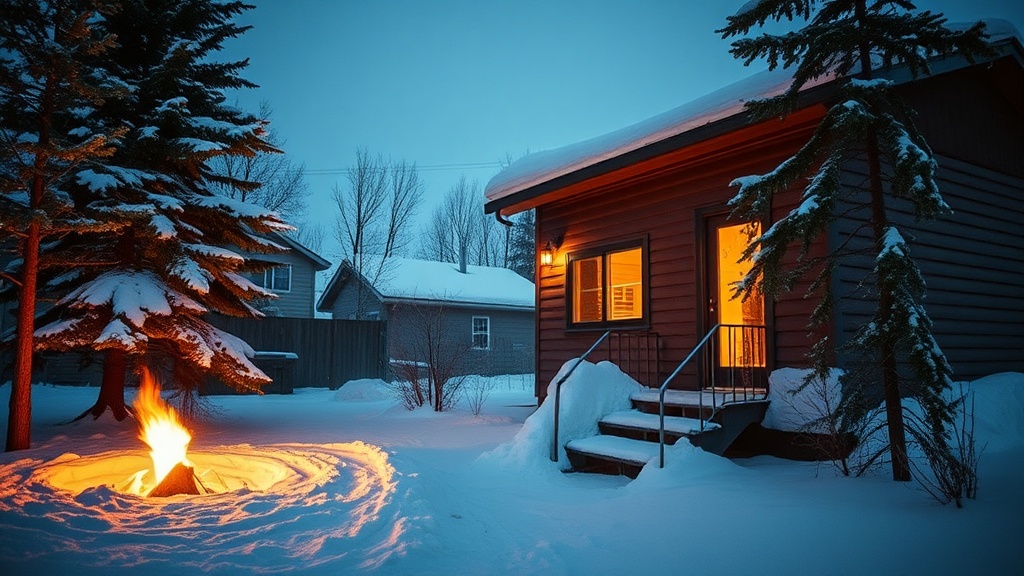
How to Winterize Your Yellowknife Home Before the Deep Freeze Hits

It's mid-September in Yellowknife, and you're standing in your driveway on Wiley Road watching the first frost settle on the windshield. The thermometer dipped below zero last night — a gentle reminder that the deep freeze is coming. In our community, winter isn't just a season; it's a six-month relationship with subzero temperatures that demands respect and preparation. If you haven't started winterizing your home yet, you're already behind the curve. Here's what we do here in Yellowknife to keep our houses warm, our pipes intact, and our heating bills from spiraling into the stratosphere.
Where Should I Start With Draft-Proofing My Yellowknife Home?
The wind coming off Great Slave Lake doesn't mess around — it'll find every crack, gap, and poorly sealed window in your house. Start with the basics: weatherstripping around doors and windows. Most homes in the Range Lake or Frame Lake neighbourhoods were built decades ago, and even newer builds in Niven can have settling issues that create gaps.
Check your attic insulation — this is where we lose a shocking amount of heat. The Natural Resources Canada Energy Star program recommends specific R-values for northern climates, and Yellowknife's extreme cold demands the highest ratings. If your insulation is compressed, wet, or older than fifteen years, it's time for an upgrade. Many local contractors (like Arctic Windows & Doors on Old Airport Road) offer free assessments — take advantage before the October rush.
Don't forget about your foundation. That gap between your siding and the concrete? Fill it with acoustic sealant — it's flexible enough to handle the expansion and contraction that comes with our dramatic temperature swings. We see swings of forty degrees in a single week sometimes, and rigid caulking will just crack and fall out.
How Do I Keep My Pipes From Freezing in Yellowknife's Coldest Months?
Frozen pipes aren't an inconvenience here — they're a catastrophe. When the mercury hits minus forty (and it will, usually by late November), any pipe exposed to outside walls or unheated spaces is at risk. We learned this the hard way during the cold snap of January 2022 when half of Old Town seemed to be dealing with burst pipes.
Start by identifying vulnerable pipes — those running along exterior walls, through crawl spaces, or in unheated garages. Wrap them with heat tape (thermostatically controlled, please — the old manual stuff is a fire hazard) and then add foam insulation sleeves on top. The Northwest Territories Power Corporation offers rebates for homeowners who upgrade their heating efficiency, including pipe insulation.
If you've got a cabin or secondary property on the Ingraham Trail, you know the drill — drain everything completely or keep the heat on low with cabinets open. But even in town, during those minus-forty weeks, let faucets drip overnight. Yes, it wastes a bit of water. Yes, it's cheaper than replacing drywall and flooring.
Know where your main water shutoff is. Seriously — if a pipe does freeze and burst, you have minutes to minimize damage. Most Yellowknife homes have the shutoff in the basement near the front wall, but newer builds in the Englewood area sometimes put them in utility closets. Find yours this weekend.
What's the Best Way to Prep My Heating System for a Yellowknife Winter?
Your furnace is about to become the hardest-working appliance in your house. If you haven't had it serviced since last winter, call Arctic Mechanical or any of the other HVAC companies that serve our community. A clean filter, properly calibrated thermostat, and inspected heat exchanger can mean the difference between comfort and a 2 AM emergency call when it's minus thirty-five outside.
Consider a programmable or smart thermostat if you don't have one. We're not talking about fancy features — just the ability to drop the temperature a few degrees when you're sleeping or away, then warm things up before you wake or return. With electricity rates what they are in the NWT (among the highest in Canada), every degree matters. Set it to 20°C when you're home, 17°C when you're away for more than four hours, and 18°C overnight.
Wood stoves are still common in Yellowknife, especially in older neighbourhoods like School Draw and parts of Niven. If you're burning wood, get your chimney swept — creosote buildup is a real fire risk, and insurance companies are getting stricter about proof of maintenance. The Yellowknife Fire Department offers free chimney inspections in early October; watch their Facebook page for announcements.
Don't neglect your garage. If it's attached to your house, an unheated garage pulls warmth from the main living space. Even a small space heater on a thermostat can make a difference — or better yet, insulate the shared wall properly. Many of us use the garage as a workshop, and trying to start a snowblower at minus twenty-five because you didn't winterize it properly is a special kind of frustration.
What About Windows, Doors, and the Little Things?
Storm windows might seem old-fashioned, but they're still standard equipment in Yellowknife. If your home doesn't have them, consider interior window insulation kits — the plastic film that shrinks tight with a hair dryer. Yes, they look a bit tacky. No, you won't care when you're saving two hundred dollars on your heating bill.
Reverse your ceiling fans. Most people don't realize that ceiling fans have a winter mode — running clockwise at low speed pulls warm air down from the ceiling where it's been collecting. This is especially useful in homes with high ceilings, like some of the newer builds on Forrest Drive.
Check your dryer vent and bathroom fans — they should have proper dampers that close when not in use. Cold air infiltration through these openings is subtle but constant. Same with your range hood vent if it vents outside. These are cheap fixes (under twenty dollars at Canadian Tire or Home Hardware) that pay for themselves quickly.
Finally, prepare for power outages. They don't happen often, but when they do — usually during a blizzard or extreme cold event — you need a plan. A small generator can keep your furnace blower running (not the heat source, just the circulation), or at minimum, have battery-powered CO detectors and a safe alternative heat source. The multiplex on Franklin Avenue has been a warming centre during extended outages; know your nearest one.
When Should I Actually Start This Process?
Ideally? You're reading this in August. Realistically? You've got until the end of September to get the major work done. Once October hits, contractors are booked solid and supplies start getting scarce. The first deep freeze often arrives by Thanksgiving weekend — sometimes earlier — and you don't want to be that person installing weatherstripping while wearing a parka.
Make a checklist. Walk around your property with a notebook and look for problems — icicles forming in the same spots (indicating heat loss), drafty rooms, windows that don't close properly, any pipe runs you're worried about. Take photos. Then prioritize: heating system first, then pipes, then drafts, then the cosmetic stuff.
Our community has adapted to living with extreme cold, but that adaptation requires annual maintenance. The homes that fare best in Yellowknife winters belong to people who treat winterization as a ritual — something you do every September without fail, like switching out your tires or putting away the garden hose. Your house protects you from the elements for six months straight. Return the favour while you still can.