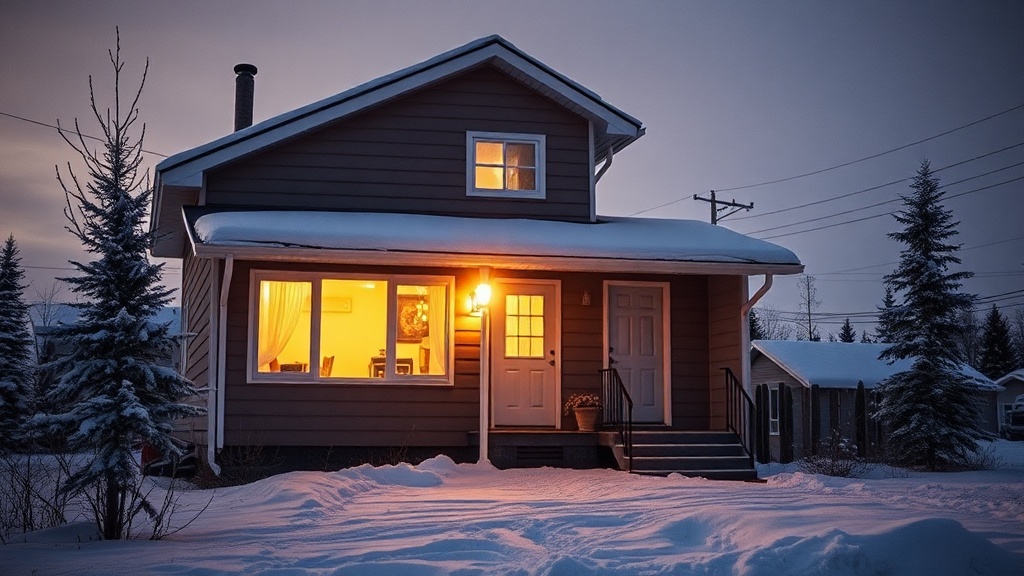
How to Prepare Your Yellowknife Home for Extended Winter Power Outages

What Supplies Should Every Yellowknife Household Stock for Winter Power Failures?
Every Yellowknife home needs a well-stocked emergency kit capable of sustaining your household through 72 hours—or longer—without electricity. Winter storms in the Northwest Territories can be unforgiving, and when the power goes out in -30°C weather, preparation isn't optional. Here's what belongs in your kit.
Water tops the list—four litres per person, per day. That's 12 litres minimum for a three-day supply. Store it in sturdy containers away from freezing pipes (your basement or an interior closet works). Non-perishable food comes next: canned goods, energy bars, dried fruit, and nut butter. Don't forget a manual can opener—an electric one won't help when Yellowknife's grid goes down.
Warmth supplies are critical in our climate. Pack wool blankets, sleeping bags rated for extreme cold, and hand warmers (the disposable kind you find at Canadian Tire or the Yellowknife Co-op). A battery-powered or hand-crank radio keeps you connected to CBC North for updates on when NTPC expects restoration. Flashlights and lanterns—multiple, with fresh batteries—beat candles for safety reasons (fire risk in tight northern homes).
Here's a practical breakdown for different household sizes:
| Household Size | Water (3 days) | Food Supply | Heating Backup |
|---|---|---|---|
| 1-2 people | 24 litres | 9,000 calories | 2 sleeping bags + 4 hand warmers |
| 3-4 people | 48 litres | 18,000 calories | 4 sleeping bags + 8 hand warmers |
| 5+ people | 60+ litres | 27,000+ calories | Sleeping bags for all + propane heater |
First aid supplies deserve their own mention. Beyond the basics—bandages, antiseptic, pain relievers—include any prescription medications your family requires. Pharmacies on Franklin Avenue may not reopen immediately after a major storm. A backup supply of inhalers, insulin, or heart medication could literally save your life when you're cut off from downtown Yellowknife.
The catch? Supplies expire. Check your kit every October—before the deep freeze hits—and rotate stock. That canned soup from 2019? Replace it. Batteries corrode; water stagnates. A 30-minute inventory each fall keeps your Yellowknife household ready when the next outage strikes.
How Can You Keep Your Yellowknife Home Warm When the Furnace Stops?
Layering your home's insulation and identifying a single "warm room" to occupy becomes your priority the moment the power fails. Our winters don't forgive—and a house in Yellowknife can drop below freezing within hours without heat.
Start with the obvious: seal drafts. Roll towels against door bottoms. Cover windows with blankets (windows in older Yellowknife homes—especially in the Old Town or Frame Lake areas—leak heat badly). Close off rooms you don't need. The smaller the space you're heating, the longer your body heat and any backup sources will sustain you.
If you own a portable generator, now's the time to understand it—safely. Never run generators indoors (carbon monoxide kills silently) or in attached garages. Place them outside, away from windows, with a heavy-duty outdoor-rated extension cord running to key appliances. A mid-sized generator—think the Honda EU2200i or similar—can power a furnace fan, a few lights, and your refrigerator. That said, generators require fuel storage. Stabilized gasoline has a shelf life; rotate your supply.
Propane heaters offer another option—if used correctly. Indoor-safe models like the Mr. Heater Buddy series include oxygen depletion sensors and tip-over shutoffs. They're widely available at Home Hardware on Old Airport Road. Keep a window cracked when running any combustion heater—yes, even "indoor-safe" ones. Ventilation matters more than perfect insulation when carbon monoxide is a risk.
Fireplaces in Yellowknife homes vary wildly. Modern inserts with blowers won't work without electricity. Wood-burning fireplaces and stoves? They're gold during outages—if you've prepared. Seasoned birch or spruce (available from suppliers around the city) burns hottest. Keep your chimney clean; creosote buildup causes house fires every winter in our community.
Don't forget the pipes. When interior temperatures drop toward freezing, open cabinet doors under sinks to let warm air circulate around plumbing. A slow drip from faucets can prevent freezing. Frozen pipes burst—and in Yellowknife's housing market, water damage repairs are expensive and slow (contractors book up fast).
What Communication Plans Work Best During Yellowknife Emergencies?
Establish a family communication protocol before storms hit—cell towers can fail, and landlines (where they still exist) sometimes remain operational when mobile networks don't. Designate an out-of-town contact everyone checks in with. Local networks get congested during emergencies; a relative in Edmonton or Vancouver can relay messages between family members separated across Yellowknife.
Keep devices charged. Power banks aren't just for camping—they're survival tools here. Anker and Jackery make reliable models that hold multiple phone charges. Solar chargers? Not practical in December when Yellowknife sees just five hours of daylight. Instead, invest in a car charger and know that your vehicle becomes a backup battery (don't run it in an enclosed garage, obviously).
CBC Radio One 91.9 FM becomes your lifeline during extended outages. The North's public broadcaster maintains local studios on 51st Street and coordinates with the Northwest Territories Power Corporation for real-time updates. A battery-powered radio—simple, old-school technology—delivers news when your smartphone becomes a brick.
Check on neighbours. Our community functions best when we look out for each other. That elderly couple on your street in Range Lake? The single parent in Forrest Park? A quick knock on the door—six feet apart, if health concerns apply—ensures no one faces the dark and cold alone. Worth noting: Yellowknife's volunteer-based Civil Emergency Measures organization coordinates welfare checks during major events, but they can't reach everyone immediately.
Protecting Your Home's Systems
Power surges when electricity returns can fry electronics and damage heating systems. Unplug sensitive equipment—computers, televisions, modern furnaces—when the outage begins. Wait ten minutes after power returns before reconnecting everything; the grid sometimes fluctuates as NTPC brings circuits back online.
Know where your electrical panel lives. Label circuits clearly (most Yellowknife homes built after 1980 have decent labeling, but older properties in Niven Lake or School Draw Avenue may mystify you). If you must shut off power manually—during flooding, say, or if you smell burning—know which breaker controls what.
Your garage door becomes a trap without electricity. Learn the manual release mechanism now, not when you need to drive someone to Stanton Territorial Hospital during a blizzard. The red cord hanging from most openers disengages the motor, allowing manual lifting.
Food Safety When the Fridge Dies
A full freezer keeps food safe for 48 hours if you don't open it—24 hours if half-full. Your refrigerator? Four hours, maximum. After that, perishables enter the danger zone. In Yellowknife's winter, you have an unconventional advantage: the outdoors becomes your freezer. A sealed cooler on your porch or balcony (secured from wildlife) preserves frozen goods indefinitely when temperatures sit below -20°C.
Keep a thermometer in your fridge and freezer. Food held above 4°C (40°F) for over two hours should be discarded—except hard cheeses, whole fruits, and most condiments. When in doubt, throw it out. Health Canada's food safety guidelines offer detailed charts for specific items.
The Mental Game
Extended outages wear on the psyche. Darkness at 3:30 PM—standard in Yellowknife December—is isolating enough with Netflix. Without electricity, the silence and blackness close in. Board games, books, and actual conversation (remember that?) pass time. Candles provide more than light—they create warmth, atmosphere, a sense of normalcy.
Maintain routines where possible. Eat at regular times. Sleep when tired. Check the Northwest Territories Power Corporation outage map periodically—obsessively refreshing helps nobody. The Government of Canada's power outage preparedness guide includes coping strategies for extended disruptions.
Here's the thing: preparation transforms potential disaster into mere inconvenience. A Yellowknife home with stored water, backup heat, charged devices, and a solid plan faces winter outages with confidence. Our city's infrastructure is strong—outages resolve, eventually—but self-reliance during those hours or days of darkness isn't just smart. In the subarctic, it's how we survive.
Steps
- 1
Assemble a 72-Hour Emergency Kit with Warmth Essentials
- 2
Set Up Alternative Heating Sources Safely
- 3
Protect Your Pipes and Prevent Frozen Water Lines